
Are Patio Cleaning Chemicals Safe to Use?

A green, slippery patio can make a garden feel neglected and become a genuine slip risk after rain. But are patio cleaning chemicals safe to use? The honest answer is that it depends on the product, the surface, how it is applied and what is nearby. Used correctly, suitable products can be safe and effective. Used carelessly, they can damage planting, affect pets and leave problems that are more expensive than the original moss.
For homeowners, landlords and property managers, the aim is simple: a cleaner, safer outside area without harming the paving, garden or people using it.
Are patio cleaning chemicals safe around homes?
Most patio cleaning products are designed either to kill organic growth such as moss, algae and lichen, or to lift dirt, black spot and weather staining. They are not all the same. A treatment that works well on a stone patio may not be appropriate for a timber deck, block paving or a surface close to a pond.
Safety begins with the label. The instructions tell you where the product can be used, how much to dilute, whether it needs rinsing and how long people and animals should stay off the area. Ignoring those details is where many avoidable issues start. More chemical does not mean a better result. It may leave residue, mark the surface or run into the surrounding garden.
Some products are biocidal treatments, meaning they are intended to control living growth. These can be useful where moss and algae are established, but they need careful handling. Others are stronger cleaners or acidic products intended for particular mineral stains. These should never be treated as general-purpose patio wash.
A clean-looking patio is not automatically safe to walk on straight away. Allow the treated surface to dry fully and follow the product guidance before letting children, pets or visitors use the area.
The main risks to manage
The biggest concern is usually not the patio itself. It is where the product goes after application. Wind, rain, overspray and rinsing water can carry cleaning solution onto lawns, borders, drains and nearby walls.
Plants are particularly vulnerable. Even products sold for outdoor use can scorch leaves or affect roots if applied directly or allowed to pool in a flower bed. Covering delicate plants may help with light overspray, but it is not a substitute for controlled application. Removing pots, garden furniture and pet bowls from the working area is often the simpler option.
Pets and children should be kept away while cleaning is under way. Once the manufacturer’s stated drying or re-entry time has passed, the patio can normally return to use. If a pet walks through wet treatment or drinks from pooled water, rinse paws with clean water and seek veterinary advice if there is any sign of illness or if the product instructions recommend it.
Run-off needs the same attention. Patio chemicals should not be allowed to enter ponds, streams, gullies or surface-water drains. This matters on the Isle of Man, where many homes have gardens, coastal conditions and drainage arrangements that make careful exterior cleaning especially sensible. Apply only the amount needed, avoid working before heavy rain and control rinse water where rinsing is required.
Not every patio needs a strong chemical
Moss is stubborn because it thrives in shade, moisture and gaps between paving. Removing it with a powerful product may give a quick visual change, but the growth will often return if the underlying conditions remain.
A good clean usually combines the right method with sensible aftercare. Sweeping away leaves, keeping drainage routes clear and trimming back dense overhanging growth can help the patio dry out more quickly. That makes the surface less welcoming to moss and algae over time.
For light dirt and early green growth, a careful mechanical clean may be enough. For ingrained organic staining, a targeted treatment can be more effective and may reduce the need for aggressive pressure washing. The right balance depends on the material and condition of the patio.
Pressure washing is useful, but it also has limits. On older block paving, high pressure can dislodge jointing material. On softer stone, it can roughen the finish and make future soiling more likely. Chemical cleaning is not automatically safer than pressure washing, and pressure washing is not automatically safer than chemical cleaning. The best method is the one that removes the problem without damaging the surface.
Match the method to the surface
Before using any patio cleaner, identify what the surface is made from. This is more important than choosing the strongest product on the shelf.
Natural stone can vary considerably. Limestone, sandstone and similar porous materials may react badly to acidic cleaners and can discolour if unsuitable products are left on them. Concrete paving can be more tolerant, but it can still stain or develop patchy areas when treated unevenly. Block paving needs care around joints, particularly if sand has already been lost through weathering or previous cleaning.
Composite decking, timber and painted surfaces should be approached differently again. A patio chemical intended for mineral paving may damage their finish or affect colour. Tarmac is another material that needs a compatible cleaner rather than a one-size-fits-all approach.
If you are unsure what material you have, test a small hidden area first. Leave it for the full recommended time, rinse if required and inspect it once dry. A test patch will not solve every problem, but it can prevent a whole patio being marked.
A safer way to clean a patio yourself
DIY cleaning can work well when the patio is in reasonable condition and you have time to prepare properly. Keep the job controlled rather than rushing straight to application.
Check the weather forecast and avoid windy conditions, frost and expected heavy rain.
Read the full product label, including dilution rates, protective equipment and drying times.
Clear furniture, toys, pet bowls and loose debris, then protect or move vulnerable plants.
Apply evenly and sparingly, keeping treatment away from drains, ponds and watercourses.
Rinse, scrub or leave the product in place only as directed by the manufacturer.
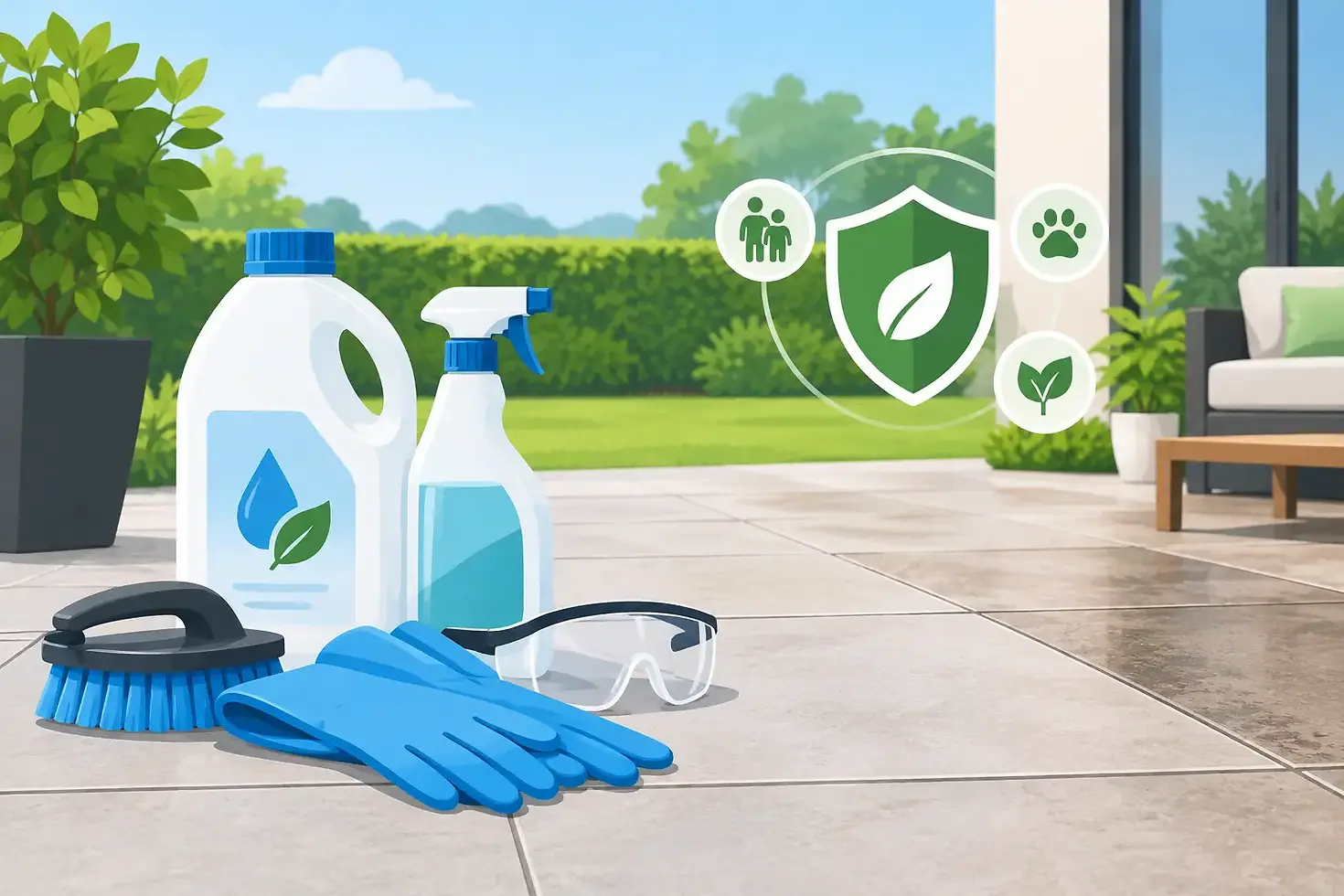
Wear gloves and suitable footwear, especially where moss has made the surface slippery. Eye protection is sensible when mixing or applying products that may splash. Never mix cleaning chemicals. Combining products can create harmful fumes or unpredictable reactions, even when each product appears safe on its own.
Store any remaining cleaner in its original container, upright and out of reach of children and animals. Do not decant it into an unlabelled bottle. If there is a spill, follow the instructions on the label rather than washing large quantities straight into a drain.
When professional patio cleaning is the safer option
There are times when bringing in a specialist is more practical than experimenting with different products. This is particularly true for large patios, heavily moss-covered paths, older paving, mixed materials or areas next to established planting and drainage points.
A professional cleaner can assess whether the main issue is organic growth, trapped grime, failed jointing, poor drainage or surface deterioration. That helps avoid treating every problem with the same chemical. A patio that stays green because water sits on it, for example, may need drainage or maintenance attention as well as cleaning.
Professional equipment and experience also allow cleaning to be adjusted to the surface. Lower pressure, controlled treatment and proper rinsing can be preferable to a harsh DIY approach. For landlords and property managers, this can be especially useful where a safe access route and a presentable exterior need to be maintained without disrupting tenants or visitors.
Manx Moss Master focuses on exterior surfaces such as patios, paths, driveways and decking, using an approach suited to the material and level of build-up. A straightforward assessment can help establish whether chemical treatment, pressure cleaning or a combination is appropriate.
Keep the patio safer after cleaning
Once the patio is clean, small regular jobs make the next deep clean easier. Sweep leaves before they break down, remove early moss from joints and avoid leaving planters where they keep one area permanently damp. Check that gutters, downpipes and drainage channels are not directing excess water across the paving.
If moss returns quickly, do not simply apply more cleaner. Look for shade, poor airflow, blocked drainage or damaged joints. Addressing the cause protects both the patio and the surrounding garden better than repeated heavy treatments.
A patio cleaner can be used safely, but it should be chosen for the surface and applied with care for everything around it. When the job involves uncertain materials, heavy growth or sensitive planting, asking for specialist advice is often the easiest way to get a clean surface without creating a new problem.


